If you have ever sat in a sterile consultation room listening to a clinician explain a treatment plan that sounds perfect on paper but feels impossible to execute in your own kitchen, you have encountered the gap between clinical trials and real-world effectiveness.
I spent over a decade as a service improvement analyst for the NHS. My job was to look at how systems functioned. We spent countless hours measuring "outcomes." But too often, those outcomes were disconnected from the reality of the people living them. A trial might tell us that 85% of patients show a clinical improvement. But what does that actually look like on a Tuesday afternoon for an actual patient trying to get to a pharmacy before it closes, while managing a flare-up of a chronic condition, and juggling the rest of life?
What is Real World Evidence (RWE)?
In the clinical world, we rely heavily on Randomized Controlled Trials (RCTs). These are the "gold standard." They are clean, they are controlled, and they are designed to isolate a single variable. They are essential for proving a drug is safe and effective.
However, once that drug or treatment hits the shelves, the "controlled" environment disappears. Real-world evidence (RWE) is the data collected from the actual use of a treatment in the real world. It accounts for the messiness of human existence: missed doses, comorbidities, lifestyle constraints, and the reality of accessing services.
According to the World Health Organization, the collection of such evidence is becoming increasingly vital to understanding whether interventions provide actual value in diverse populations. RWE isn't just a secondary consideration; it is the evidence base for how care actually functions when the researcher leaves the room.
The Shift from Standardized to Individualized Care
For years, our health systems were built on the "standardized care" model. If you have Condition X, you receive Treatment Y. This approach is efficient for hospital administration, but it is often inefficient for the human body.
We are currently undergoing a shift toward individualized care. This doesn't mean "bespoke medicine" in the sense of gold-plated, expensive treatments. It means recognizing that for chronic conditions, a one-size-fits-all approach is a recipe for poor adherence and sub-optimal long term results.

Why Flexibility Matters for Chronic Conditions
Chronic conditions are not static. They are dynamic. A patient with a long-term condition might have a stable Monday, but a disastrous Wednesday. If a treatment protocol doesn't account for that fluctuation, the patient is forced to manage the gap between the instructions and their reality alone.
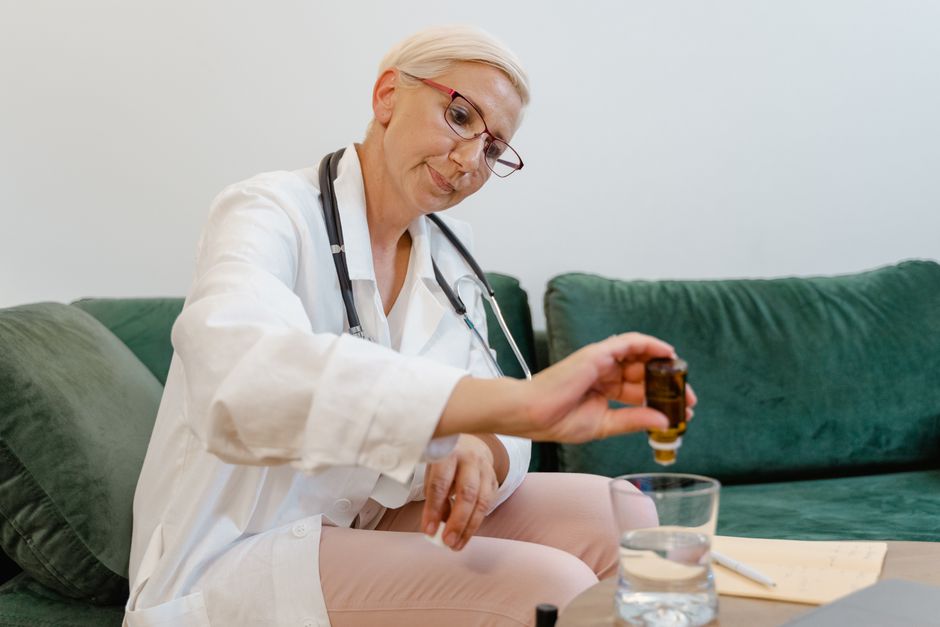
When we talk about patient reported outcomes (PROs), we aren't just looking at blood pressure numbers or lab results. We are asking, "Can you manage your daily tasks?" "Are you in pain while doing the school run?" "Is this medication making you so tired that you can’t work?" These qualitative inputs are the backbone of RWE.
symptom management strategies Feature Clinical Trial Approach Real-World Effectiveness Patient Profile Strict inclusion criteria Broad, diverse population Setting Highly controlled Community/Home/Primary Care Primary Goal Efficacy (Does it work?) Effectiveness (Is it working for you?) Timeframe Fixed duration Continuous, long-term monitoringAlternative Therapies: Adding, Not Replacing
One of the most persistent, tired tropes in healthcare debates is the false binary: either you trust "conventional" medicine, or you opt for "alternative" therapies. This is a false dichotomy that helps no one.
In a responsible integrative medicine framework, alternative or complementary pathways serve as an *addition* to core treatment, not a replacement. For example, a patient dealing with chronic back pain might follow their clinical medication regimen, but integrate movement-based therapy to manage the stiffness that the https://highstylife.com/finding-therapy-in-your-local-area-a-no-nonsense-guide-to-navigating-the-system/ medication doesn't address.
The problem arises when these pathways aren't coordinated. If a patient is layering treatments without clinician oversight, they risk interactions and confusion. The goal of real-world effectiveness is to move toward responsible coordination—where a GP or primary care team is aware of the full "portfolio" of what a patient is doing to stay well.
Addressing the "Vague Phrases" Trap
As a writer, I keep a blacklist of phrases that trigger my internal red-pen reflex. These are the words that appear in glossy brochures but mean nothing to the person trying to find a doctor on a Tuesday afternoon:
- "Empowering your journey." (Usually means, "we aren't going to help you navigate the system.") "Seamless, patient-centered care." (Usually means, "the departments aren't talking to each other.") "Unlocking your potential." (Usually means, "we have no concrete plan.")
Real-world effectiveness is about the opposite of these phrases. It’s about the friction of daily life. It’s about recognizing that access to a specialist is often dictated by bus schedules, not by the urgency of the symptoms. It’s about acknowledging that "follow-up" is not just an appointment date, but a logistical hurdle for working parents or the elderly.
The Crux of the Issue: Access and Continuity
When we discuss health outcomes, we rarely discuss the logistics. A "miracle" treatment is useless if the patient cannot afford the travel time to get to the clinic, or if the administrative hurdles for a repeat prescription are so high that they simply give up.
We must start evaluating treatment plans based on their *sustainability* in the real world. If a plan requires three follow-up visits a month for a patient who has no car and limited leave from work, that plan is not "effective"—it is inaccessible. By focusing on real world evidence, we force health systems to look at these constraints. We shift the question from "Does this protocol work?" to "Does this protocol work for the person living with this condition every single day?"
Conclusion: Moving Forward
The transition toward valuing real-world evidence is a move toward honesty. It admits that medicine is not a perfect science conducted in a vacuum. It acknowledges that the patient is the ultimate expert on their own symptoms and the constraints of their own life.
Whether you are a clinician trying to improve your local service, or a patient trying to make sense of conflicting advice, the focus should always be on what is actually sustainable in the long run. Real-world effectiveness isn't a buzzword; it’s the bridge between the clinic and your life.
Log in to leave a comment
To share your experience with real-world care, please log in.
Username or Email Address
Password
Cancel reply